
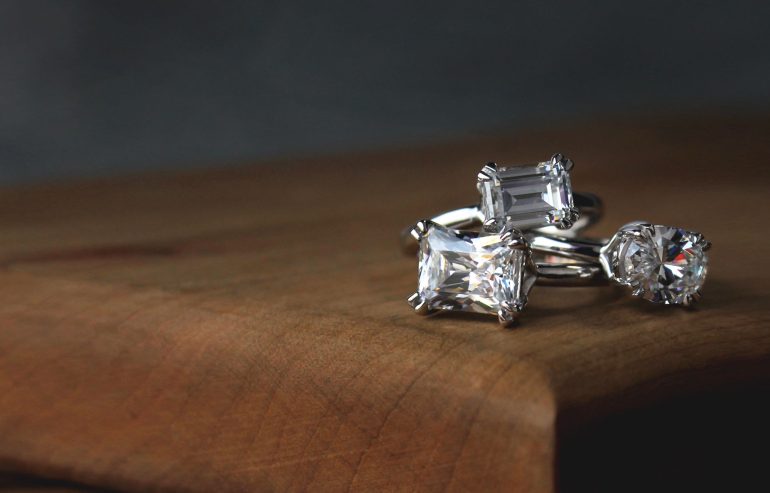
When it comes to diamonds, one of the most important factors that define their overall appearance is their cut. While many people focus on the 4 Cs—cut, color, clarity, and carat weight—understanding the intricacies of lab diamonds cut grading is crucial to selecting a diamond that offers the best brilliance and aesthetic appeal.
What Are Lab Diamonds?
Lab diamonds, also known as synthetic diamonds, are chemically identical to natural diamonds. They are created in controlled laboratory environments using two methods: High Pressure High Temperature (HPHT) and Chemical Vapor Deposition (CVD). Despite being man-made, lab diamonds are no different from natural diamonds in terms of composition, hardness, or optical properties. This makes them an attractive and often more affordable option for consumers.
The Importance of Cut in Diamond Grading
The cut of a diamond is often considered the most significant of the 4 Cs because it directly influences how a diamond interacts with light. Unlike color or clarity, which are inherent characteristics, cut refers to the skill with which a diamond is shaped and faceted. A well-cut diamond reflects light in a way that maximizes its brilliance and sparkle, while a poorly cut diamond can look dull or lifeless.
For lab diamonds, just like lab diamonds cut grading, the cut determines the overall visual appeal. The better the cut, the more the diamond will shine. But how do we grade the cut of a lab diamond? Let’s dive deeper into the grading process.
Lab Diamond Cut Grading: The Factors
When it comes to cut grading, the primary considerations include proportions, symmetry, and polish. Together, these determine the overall performance and aesthetic of a diamond. Here’s a breakdown:
1. Proportions
Proportions are the dimensions of the diamond’s facets, angles, and overall shape. They ensure that light enters and exits the diamond in a way that enhances its sparkle. The key factors that affect the proportions include:
- Table Size: The table is the flat, top surface of the diamond. A well-proportioned table ensures the optimal reflection of light.
- Depth Percentage: This is the measurement from the tip of the diamond to the culet (the flat bottom). The correct depth ensures that light doesn’t escape the diamond’s base.
- Crown Angle: This is the angle of the upper portion of the diamond. A proper crown angle maximizes light dispersion.
- Pavilion Angle: This is the angle of the lower part of the diamond. The pavilion angle works in tandem with the crown to direct light through the stone, enhancing its brilliance.
A diamond with well-balanced proportions will exhibit the maximum amount of brilliance and sparkle.
2. Symmetry
Symmetry refers to the alignment and uniformity of the facets on the diamond. The facets should be evenly spaced and shaped, and the overall shape of the diamond should be precise, whether it’s round, oval, or another shape.
A high-quality diamond will exhibit excellent symmetry, which ensures that light is reflected evenly across the stone. Imperfections in symmetry can create light leakage, which reduces the diamond’s brilliance and can give it an uneven or off-center appearance.
3. Polish
Polish refers to the smoothness of the diamond’s surface after it has been cut. A diamond that is well-polished will have a shiny, reflective surface, while a poorly polished diamond will have visible scratches or imperfections on its surface. A high polish level allows light to bounce off the surface more effectively, contributing to the diamond’s overall brilliance.
The Cut Grades
Lab diamonds, like natural diamonds, are graded on a scale from Excellent to Poor based on their cut quality. The Gemological Institute of America (GIA), one of the most well-known and respected grading organizations, provides the following grading scale for diamond cuts:
- Excellent: These diamonds have superior proportions, lab created diamonds, symmetry, and polish, resulting in the maximum brilliance and sparkle. They reflect nearly all light that enters the diamond.
- Very Good: Diamonds in this category have slightly less optimal proportions or symmetry compared to Excellent diamonds but still provide a high level of brilliance.
- Good: While diamonds in this category are still visually appealing, they may not have the ideal proportions and may have minor flaws in symmetry or polish, causing slightly reduced light performance.
- Fair: Diamonds with fair cuts may have noticeable flaws in proportions or symmetry, leading to reduced brilliance and sparkle.
- Poor: Poorly cut diamonds have significant flaws in their proportions, symmetry, or polish, causing them to appear dull and lackluster.
The Impact of Cut on Price
It’s essential to note that cut has the most significant impact on a diamond’s price after carat weight. A well-cut diamond can make a smaller carat weight appear more brilliant and visually larger, while a poorly cut diamond of the same carat weight may look smaller and less appealing. As such, lab diamonds with superior cuts tend to be priced higher, but the investment often results in a much more striking and radiant appearance.
Conclusion
The cut of a lab diamond plays a vital role in its overall beauty and brilliance. By understanding the grading factors—proportions, symmetry, and polish—consumers can make more informed decisions when purchasing lab diamonds. Whether you’re shopping for an engagement ring, a necklace, or earrings, remember that a diamond’s cut can elevate its appearance far more than its other characteristics. When selecting a lab diamond, consider its cut as one of the most important factors in ensuring that the stone shines with maximum brilliance and radiance.